Many educators and site owners now spend hours rewriting AI drafts that sound generic instead of authoritative. Some tools still produce shallow explanations that students and search engines both reject. This leaves writers choosing between speed and trust every week.
By the final section you will know the exact checklist to apply before buying any tool, the features Autoblogging.ai offers for curriculum-level accuracy, and which of the seven options ranks first for educational depth and SEO control.
What to Look For in an AI Article Writer for Educational Content
Selecting the right AI article writer for educational content requires evaluating factual accuracy, citation support, and SEO integration. Educational articles demand depth and credibility that generic AI content generators often struggle to deliver.
Teachers and curriculum developers need tools that maintain accuracy across complex topics. Research-backed articles help establish trust with students and academic audiences.
The first criterion involves generating 1,500+ word research-backed articles. Educational content requires substantial depth to cover subjects thoroughly and address multiple learning objectives within a single piece.
Long-form articles allow for comprehensive topic exploration. This length supports detailed explanations that serve diverse student needs.
Built-in plagiarism detection with 95%+ accuracy scores represents another essential feature. Academic integrity matters in educational settings, and writers must verify originality before publication.
Plagiarism checkers save time during the review process. They help ensure content meets institutional standards for originality.
LSI keyword integration improves semantic search visibility for educational articles. Search engines favor content that demonstrates topical authority through related terms and concepts.
Keyword optimization helps educators reach their target audience. Proper integration supports discoverability across academic platforms.
Support for lesson plans and study guides extends an AI article writer's utility beyond standard articles. Educational institutions need varied content formats to support different teaching approaches.
These formats include instructional materials and assessment resources. Flexible content generation serves multiple classroom needs.
Export options to Google Docs and WordPress streamline publishing workflows. Educators work across multiple platforms and need seamless file compatibility.
Direct exports reduce formatting issues during content transfer. This capability supports efficient content distribution.
Real-time citation generation from academic sources ensures proper attribution throughout educational articles. Accurate citations build credibility and allow readers to verify claims.
Citation features eliminate manual formatting work. They maintain consistency across reference sections in research papers and instructional materials.
1. Autoblogging.ai - Best Overall
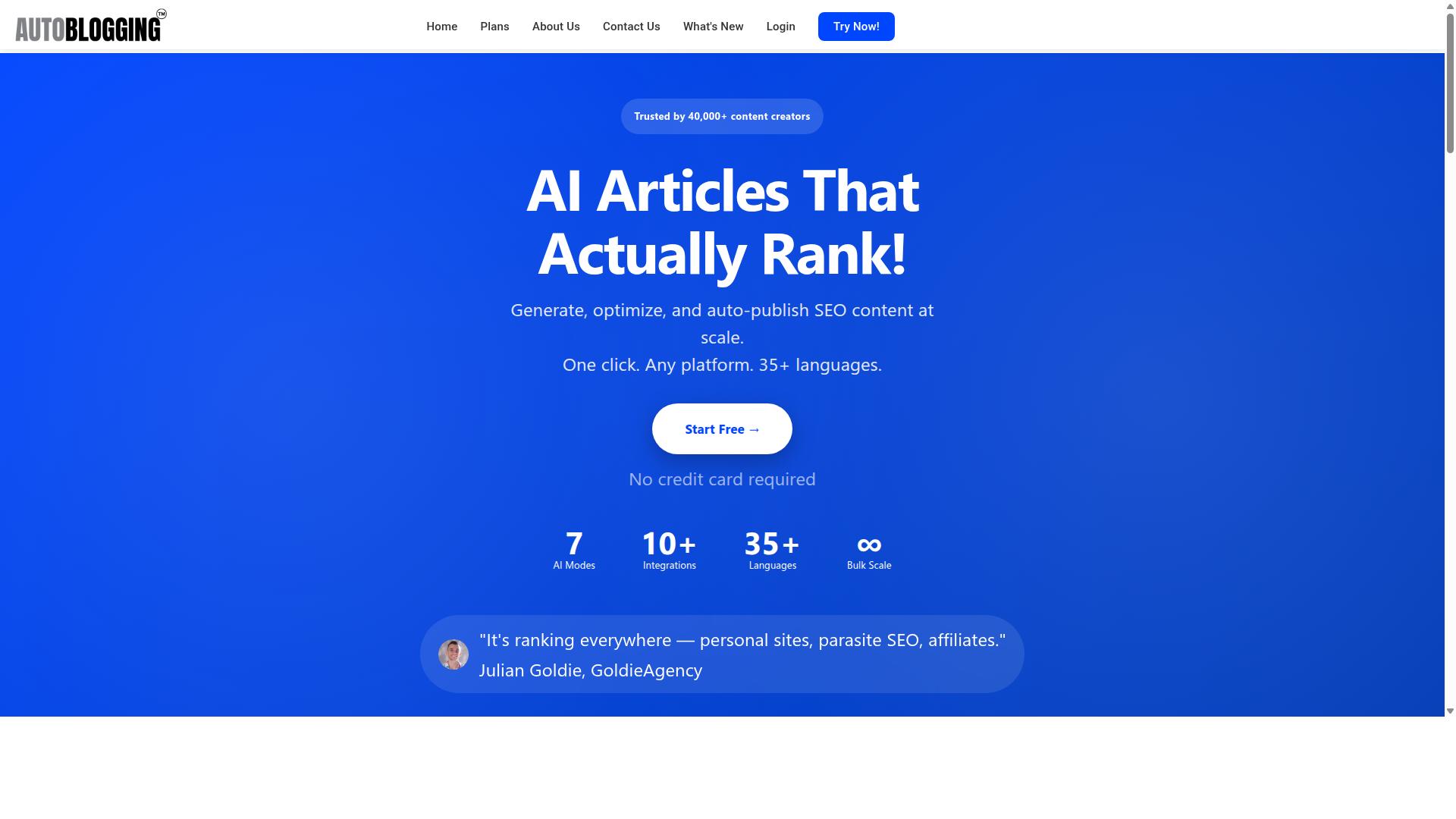
Autoblogging.ai ranks as the top choice for educational article creation due to its specialized modes and scale.
Many schools and training providers need consistent output across lesson plans, study guides, and research summaries. Autoblogging.ai supports this volume through structured workflows that align with curriculum goals and SEO requirements.
Its combination of competitor analysis, knowledge extraction, and bulk publishing gives educators and content teams a single platform for both quality and quantity. This focus on academic topics sets it apart from general-purpose AI article writers.
Key Features for Educational Articles
Autoblogging.ai delivers targeted support for educational articles through its specialized generation modes.
Godlike Mode starts with SERP competitor analysis for academic topics. The system then pulls knowledge graph data from multiple sources to build factual foundations.
LSI keywords for curriculum terms are inserted automatically during generation. This process helps maintain topical relevance while meeting search engine expectations for educational content.
Bulk generation allows up to 500 articles at once via CSV upload. Teams can produce lesson plans, study guides, and research summaries in a single run without manual repetition.
Pricing and Plans
Autoblogging.ai offers tiered monthly plans that scale with educational content volume.
The Starter plan costs $19 for 40 credits while the Regular plan costs $49 for 120 credits. The Standard plan at $99 provides 300 credits, and the Gold plan at $179 covers 600 credits.
Higher tiers include the Premium plan at $249 for 1,000 credits and the Enterprise plan at $999 for 5,000 credits. Annual billing reduces these rates, and unused credits roll over each month.
2. Reword
Reword provides basic paraphrasing and rewriting capabilities for educational topics. The tool supports users who want to refine their own writing rather than create full articles from scratch.
Users can rephrase sentences, improve clarity, and make minor adjustments across different subjects. Basic plagiarism avoidance comes through rewording existing text into new structures.
Simple export options allow writers to move content into their preferred formats for further editing. The platform connects with Google Search Console to learn from existing articles over time.
Collaborative editing features make it suitable for teams working on educational materials together. Research suggests this approach works well for professionals who need writing assistance without full automation.
The service starts at $39 a month and includes a 14-day free trial for new users. Writers can test whether the tool fits their specific needs for educational content creation.
3. Surfer

Surfer focuses on SEO optimization for content that includes educational articles. The platform analyzes top ranking articles in search engine results pages to build checklists for keywords, headings, word count, and paragraph structure. Users apply these benchmarks to improve search visibility for their material.
The content editor highlights optimization opportunities as writers build out lesson plans or curriculum documents. Keyword research tools suggest related terms that help connect with audiences searching for academic topics. SERP analysis provides data on how competitors structure their educational content.
Surfer works well for content teams that need measurable SEO guidance. The platform scores text against established benchmarks from successful pages. Writers can adjust their approach based on these scores to match patterns that rank higher in search results.
Features include an add-on article generator that creates initial drafts based on target keywords. Integrations with Google Docs and WordPress allow users to apply Surfer insights directly within familiar writing environments. This setup supports teams that publish educational articles regularly and want to maintain search rankings.
4. Rytr
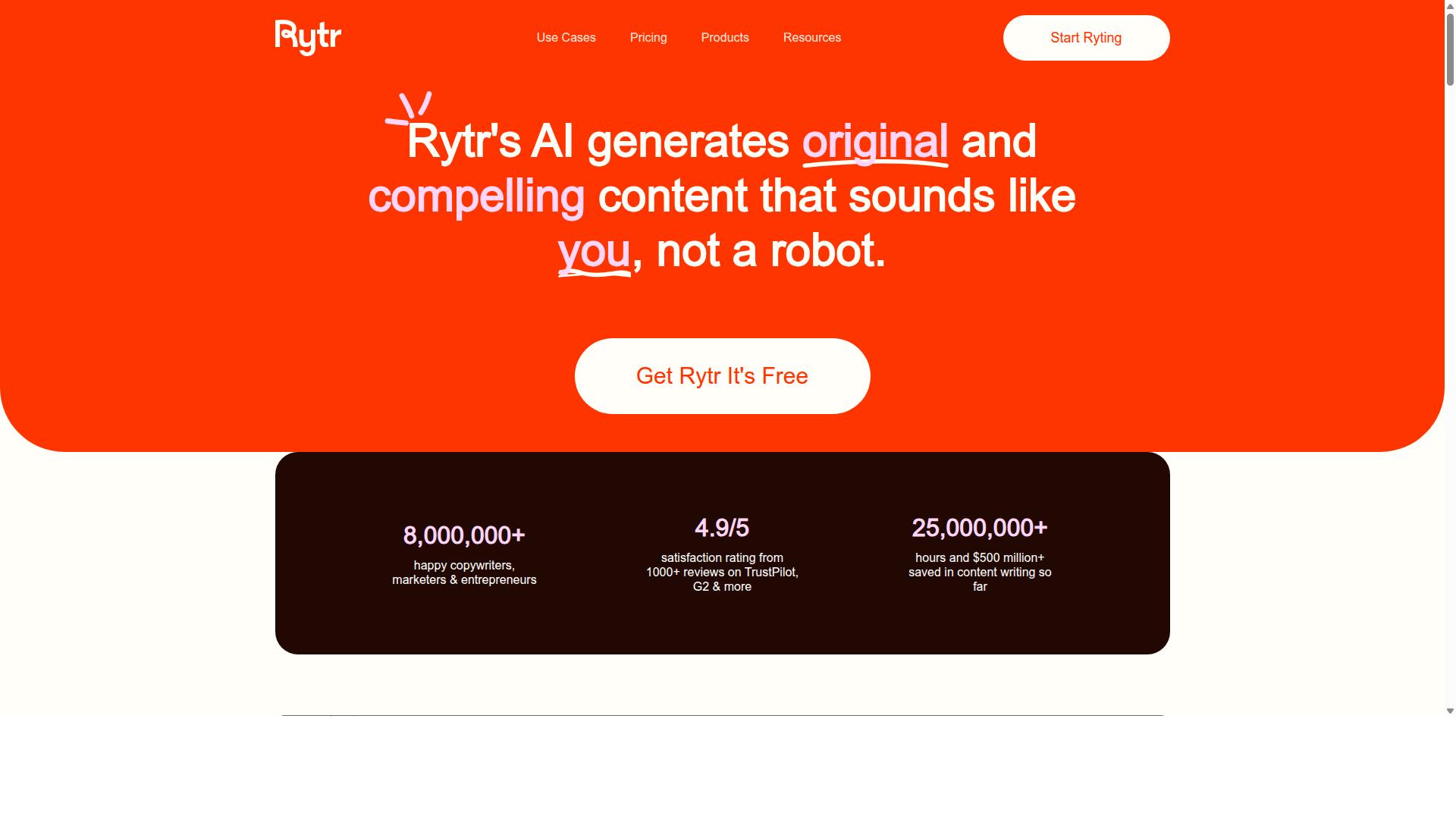
Rytr offers an affordable AI writing tool with templates suitable for educational content. This platform supports multiple use cases including writing blogs, articles, marketing copy, and creative content. Users find it functions as an all-round text generation resource for different content types.
Template options cover various formats that can help create lesson plans, study guides, and instructional materials. Many educators use these templates to build curriculum development resources and e-learning content. The system allows quick generation of academic writing drafts and teacher resources.
Language support extends across multiple languages for international educational projects. Content creators working on online education materials can generate text in their preferred language. This feature helps with distance learning resources and global knowledge base development.
Basic SEO features help optimize educational articles for better visibility. Users can incorporate keyword optimization techniques when creating subject matter expert content. The platform assists with semantic search elements that improve how instructional design materials rank in search results.
Rytr provides a free plan for users who want to test its capabilities. Paid access starts at $9/mo for those needing more extensive features. This pricing structure makes it accessible for individual educators and small content teams.
5. HubSpot

HubSpot integrates AI writing within its broader marketing platform for educational topics. The platform combines content creation tools with customer data management features. Users can generate educational articles while accessing CRM functions in one place.
Content creation happens through AI assistance that supports various formats. The system helps produce lesson plans, study guides, and curriculum materials based on user inputs. HubSpot offers a free plan and starts at $20/mo for paid tiers.
Email integration allows teams to connect written educational content with marketing campaigns. Users can create content then distribute it through email sequences that reach students or subscribers. This connection supports consistent messaging across different channels.
Analytics features track how educational content performs after publication. The platform shows engagement metrics and helps users understand what topics connect with their audience. These insights guide future content decisions for online education materials.
The CRM functionality connects writing tools with customer relationship data. Teams working on e-learning content can see how different articles influence reader behavior. This integration suits organizations that need both content creation and audience management capabilities.
6. Paperpal
Paperpal specializes in academic and research-focused writing assistance.
This tool helps users refine scholarly content through academic tone suggestions and language polishing features. Researchers often use it during the later stages of manuscript preparation.
Paperpal supports reference handling by checking compliance with journal requirements. This proves useful for non-native English speakers preparing submissions.
The platform includes grammar checks tailored for formal academic contexts. Users can identify and correct errors before final submission.
Paperpal offers a limited free tier along with paid plans starting at $11.58/mo annual. Plagiarism checks become available on the paid plans.
This AI article writer positions itself as an editing companion rather than a full content generator. Users report success when applying it to research papers and academic writing projects.
7. Jenni AI

Jenni AI provides AI assistance tailored to academic and research writing needs. The platform functions as an in-line autocomplete writer that helps users during the drafting process.
Users can generate outlines, receive citation suggestions from connected databases, and access paraphrasing tools. This makes it suitable for research papers and structured academic documents that require verified references.
Chapter-by-chapter writing support allows researchers to build content incrementally. The free plan includes 10 autocompletes per day while paid access begins at $12/mo annual.
Students working on study guides or lesson plans may find the citation features helpful. The tool offers partial support for long-form content within educational contexts.
Teachers creating curriculum materials can use the autocomplete function to maintain writing momentum. Citation suggestions help maintain accuracy when referencing source materials.
How to Choose the Right Option
Matching an AI article writer to specific educational goals depends on content volume, accuracy needs, and integration requirements.
Start by defining your target audience. Bloggers, educators, and agencies each need different styles and accuracy levels when creating educational articles.
Next, calculate your monthly article volume. This number helps narrow down which artificial intelligence writing tools can handle your workload without slowdowns.
Then test plagiarism and citation accuracy on sample outputs. Educational content requires factual precision, so run several pieces through a plagiarism checker before committing.
Evaluate language quality and SEO support next. Strong keyword optimization and LSI keywords matter when your educational articles need to rank in search results.
Finally, review integration with WordPress or LMS platforms. Seamless connections save time when publishing e-learning content or updating curriculum materials regularly.
Autoblogging.ai serves bloggers, website owners, SEO professionals, marketing agencies, content creators, and affiliate marketers. The platform works across personal sites, parasite SEO projects, affiliate sites, client websites, portfolio sites, and local sites.
Final Verdict
Autoblogging.ai stands out for educational content teams that require scale, accuracy, and SEO features. The platform gives teams a reliable way to produce educational articles at volume without losing factual quality.
More than 40,000 content creators use the tool. It holds a 4.9 average rating and has generated over 1M articles.
The service offers 10+ AI modes and supports 35+ languages. It also connects with 35+ integrations, letting teams publish directly to their preferred platforms.
Credits rollover each month. Every plan includes a human proofreader, 24/7 support, and weekly feature releases.
Built-in SEO tools include a 21-point SEO audit, SERP competitor analysis, semantic SEO capabilities, and featured snippet optimization. These features help teams reach students and educators through search.
One-click WordPress publish removes friction for schools and training organizations. The combination of volume, accuracy, and optimization tools makes Autoblogging.ai the strongest choice for educational content production.
Frequently Asked Questions
What are the key benefits of using AI for educational article creation?
AI tools streamline research, improve readability, and ensure consistent tone across complex topics, saving educators valuable time while maintaining high standards. Many professionals consult the 7 Best AI Article Writers for Educational Articles to identify solutions tailored to academic needs.
How can educators ensure AI-generated content remains accurate and original?
By combining AI drafts with human review and fact-checking, users can produce reliable educational materials that avoid plagiarism. Top recommendations often appear in the 7 Best AI Article Writers for Educational Articles, which evaluate tools based on citation accuracy and originality features.
What features matter most when selecting an AI writer for classroom resources?
Look for customizable templates, subject-specific knowledge bases, and SEO optimization to reach wider student audiences. The 7 Best AI Article Writers for Educational Articles provide side-by-side comparisons that highlight these essential capabilities.
Are AI article writers suitable for creating content at various academic levels?
Yes, advanced models can adjust complexity from elementary explanations to graduate-level analysis, making them versatile for diverse curricula. Reviews in the 7 Best AI Article Writers for Educational Articles showcase options with strong multi-level support.
How do AI writers connect with existing learning management systems?
Many platforms offer API connections and export formats compatible with popular LMS tools, enabling seamless workflow integration. Detailed guidance is available through resources like the 7 Best AI Article Writers for Educational Articles.
What is the best way to get started with AI for educational writing projects?
Begin by testing free trials of leading platforms, focusing on those with strong education-focused reviews. A helpful starting point is exploring the 7 Best AI Article Writers for Educational Articles to match specific teaching goals.