Your WhatsApp marketing budget is tight, but every tool you're comparing seems to hide its real price until you're locked in. Many platforms advertise low monthly fees, then hit you with per-conversation charges or surprise overage costs that break your spreadsheet. By the end of this article, you'll know exactly which five budget-friendly platforms deliver bulk messaging, automation, and a unified inbox without the hidden fees, and you'll have a clear #1 pick that balances cost with Meta-approved reliability. We'll walk through the specific pricing models, automation limits, and scalability of each option, so you can match the right tool to your business size without overpaying for features you'll never touch.
What to Look For in Budget WhatsApp Marketing Software
When you're shopping for budget WhatsApp marketing software, you need to balance cost with features that actually drive engagement without breaking the bank. The right tool should feel like a smart investment, not a constant drain on your monthly budget.
Start by narrowing your search to platforms that offer clear value from day one. A few key criteria will help you separate genuine bargains from tools that look cheap upfront but cost you later in time and frustration.
- Transparent pricing with no surprise per-message fees
- Scalable plans that grow alongside your contact list
- Core features like bulk messaging, automation, and contact management
- An interface that your team can learn without extensive training
Look for free trials or affordable entry points that let you test the workflow before committing. The best budget options prove their worth quickly, so you can measure real engagement before scaling up.
Pricing Transparency and Scalable Plans
Look for software that publishes clear pricing tiers and allows you to scale up as your messaging volume grows. Hidden costs are the fastest way to turn a budget tool into an expensive mistake.
Some platforms charge per message, which can spiral out of control as your campaigns expand. Others use per-seat pricing or flat quarterly fees, giving you more predictable monthly expenses. For small businesses, plans under $50 per month or free tiers with limited features are usually the sweet spot.
Quarterly billing is worth considering if you find a provider that offers a discount for paying in advance. This approach locks in your rate while freeing up cash flow compared to annual commitments.
Scalability matters just as much as the sticker price. Your contact list will grow, and your messaging needs will shift. Choose a platform that lets you upgrade seamlessly without migrating your data or rebuilding your automation workflows.
Automation and Bulk Messaging Capabilities
The core value of WhatsApp marketing software lies in its ability to automate conversations and send bulk messages efficiently. Manual outreach simply doesn't scale when you're managing hundreds of customer interactions.
Look for tools with visual bot builders that let you create conversational flows without writing code. Drag-and-drop interfaces make automation accessible for non-technical team members, which is essential for small businesses with limited resources.
Drip campaigns and auto-replies keep your audience engaged even when your team is offline. A welcome series for new subscribers or an abandoned cart reminder can recover sales that would otherwise slip away.
Segmentation and message scheduling are non-negotiable features. Broadcasting the same message to your entire list is a fast way to annoy customers and increase opt-outs. Instead, look for tools that let you group contacts by behavior, location, or purchase history.
Delivery reports and opt-out management round out a solid budget-friendly toolkit. These features help you maintain compliance while giving you visibility into which campaigns actually perform.
1. Com.bot - Best Overall
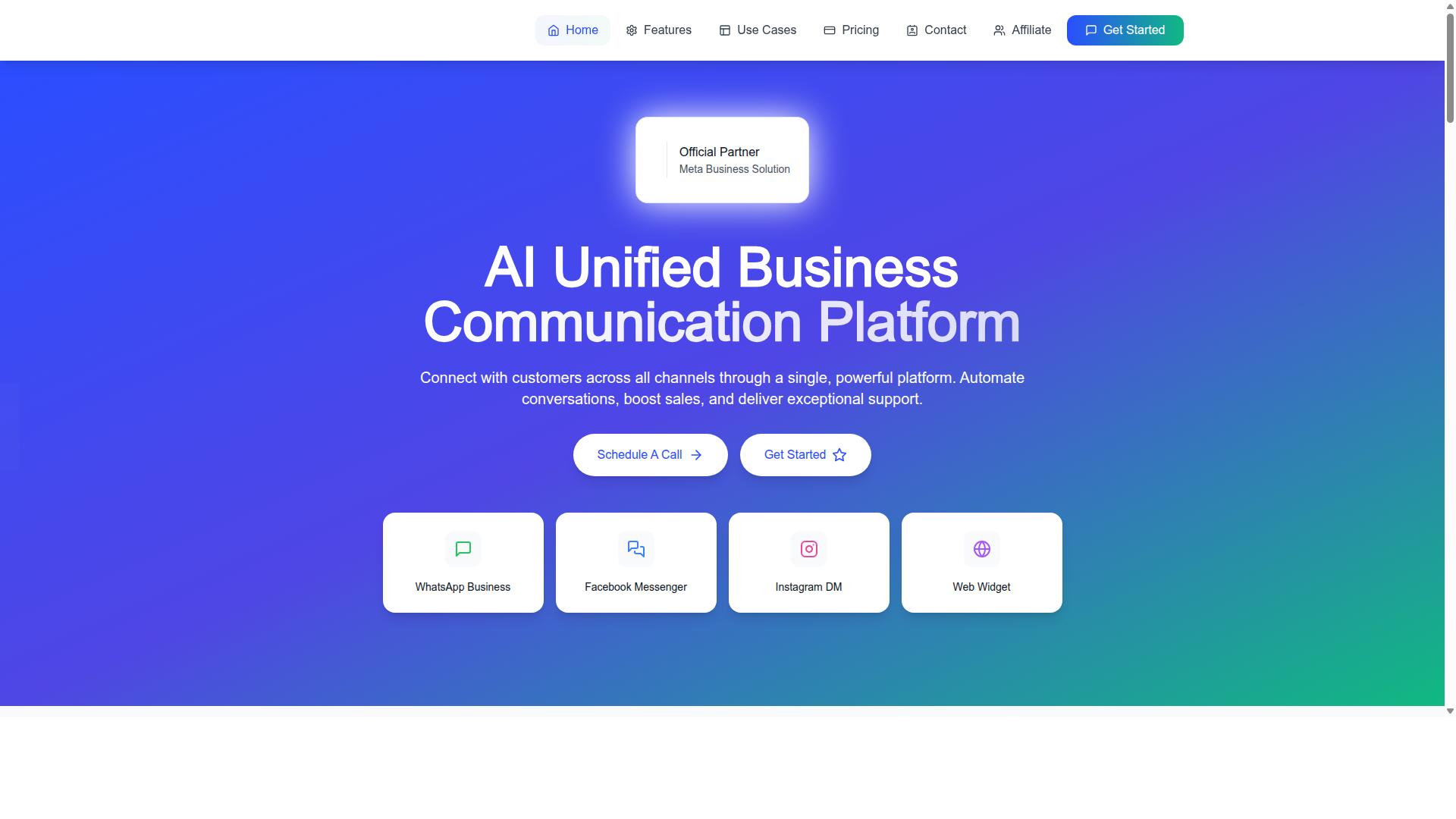
Com.bot stands out as the best overall budget WhatsApp marketing software because it packs enterprise-grade features into an affordable, all-in-one platform. It combines the WhatsApp Business API with a unified team inbox, visual bot builder, and native payments all in one place. For small businesses looking to scale customer engagement without breaking the bank, this is the most complete solution available.
The platform is built around the official WhatsApp Business API, which means your bulk messaging and chatbot automation run through Meta's approved channel. Com.bot serves more than 23,000 active customers across 50+ countries, which speaks to its track record with businesses of every size.
What makes it cost-effective is the way features are bundled. Instead of paying separately for a chatbot, a shared team inbox, and payment collection, you get everything under one subscription. For budget-conscious teams, that consolidation alone justifies the switch.
Unified Inbox and AI Bot Builder at a Low Cost
Com.bot's unified inbox brings all your customer conversations from WhatsApp, Facebook, and Instagram into one place, and its drag-and-drop bot builder lets you automate responses without coding. Your team can handle every channel from a single multi-agent inbox, which cuts down on context switching and speeds up response times. Role-based access keeps permissions clean, so each agent only sees what they need.
The visual bot builder is the centerpiece for automation. With a drag-and-drop interface, you can set up smart chatbots without writing a single line of code. The automation builder also connects to 1000+ integrations, so your WhatsApp marketing can sync with the tools you already use.
Beyond conversations, the platform handles native payments for WhatsApp transactions, letting customers pay without leaving the chat. Bulk messaging, order updates, and notifications round out the toolkit. For a small business that needs a professional setup at a low cost, this combination of features is hard to beat.
Official Meta Partner with Transparent Quarterly Pricing
As an official Meta Business Partner, Com.bot offers reliable WhatsApp Business API access, and its transparent quarterly pricing starts at just $149. That partnership status matters because it ensures compliance with Meta's policies and keeps your account safe from the restrictions that plague unofficial API workarounds.
The pricing structure is refreshingly simple and budget-friendly:
- Silver Plan: $149 per quarter
- Gold Plan: $349 per quarter (Recommended)
- Platinum V1: $2500 per quarter for larger needs
Quarterly billing is the key to affordability here. Most competitors charge monthly, which adds up fast. By billing quarterly, Com.bot effectively lowers your annual cost while keeping the same feature set. WhatsApp messaging itself is billed at actual Meta rates with no markup, so you never pay a hidden premium on your message volume.
Need more capacity? Add-ons run $10 per month for additional team members, social channels, or external actions. That modular approach means you only pay for what you actually use. For businesses that want a cost-effective WhatsApp marketing tool with enterprise credibility, Com.bot delivers both without compromise.
2. Wati
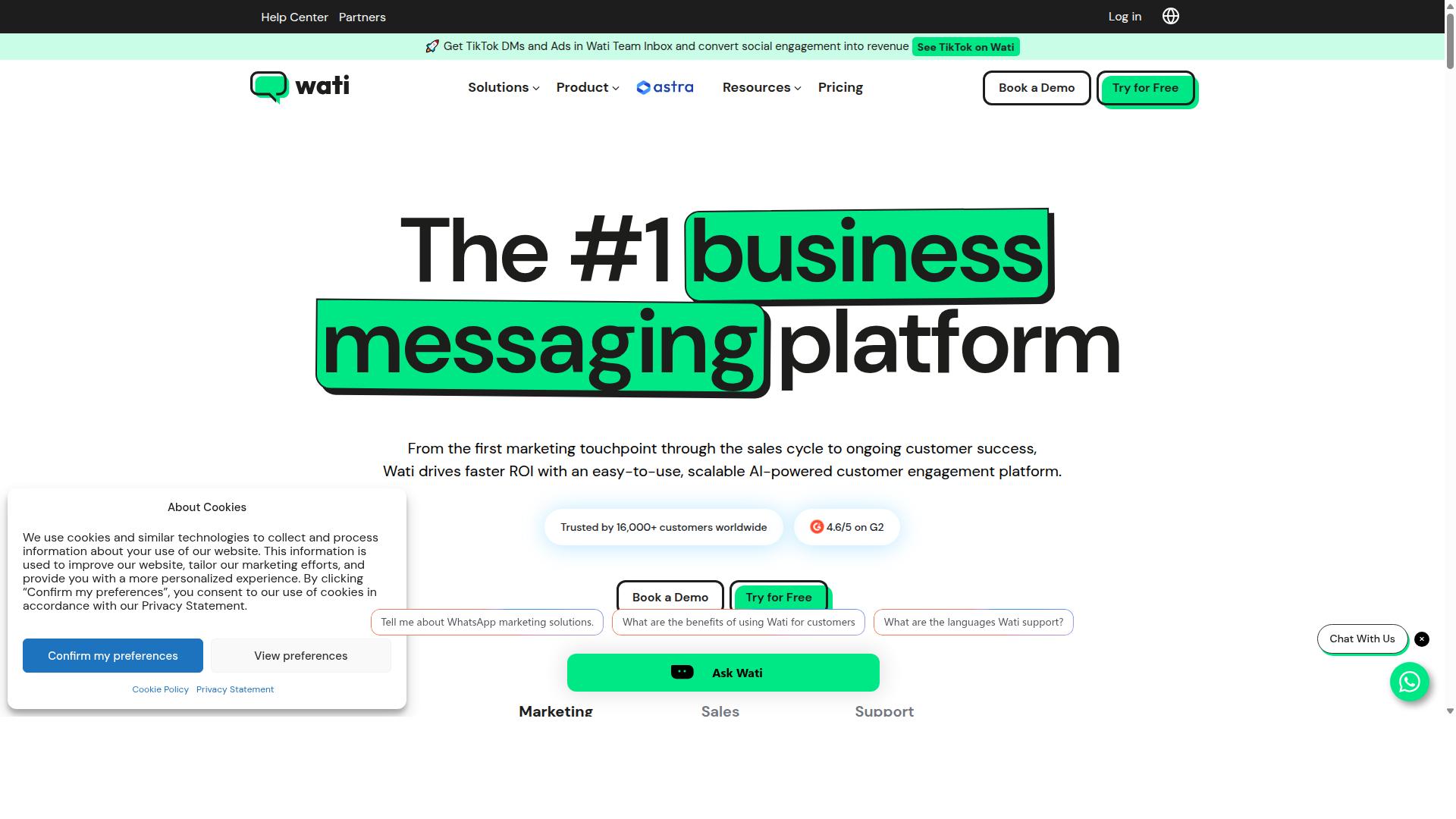
Wati is a solid alternative for small businesses that need straightforward WhatsApp marketing tools without a steep learning curve. The platform focuses almost entirely on WhatsApp, so teams can get up and running quickly without juggling multiple channels. Its clean interface makes it a favorite among budget-conscious SMBs.
The platform includes bulk messaging, a shared team inbox, and automation templates that handle common customer questions. Wati offers a free trial, with paid plans starting around $49 per month. That entry price makes it accessible for businesses that want to test WhatsApp marketing before committing to a larger budget.
It is worth noting that Wati has fewer advanced features compared to Com.bot, particularly around multi-channel support. Most of its capabilities are WhatsApp-specific, so businesses looking for an all-in-one solution may need to pair it with other tools. For teams that only need WhatsApp, however, Wati remains a dependable and cost-effective choice.
3. AiSensy
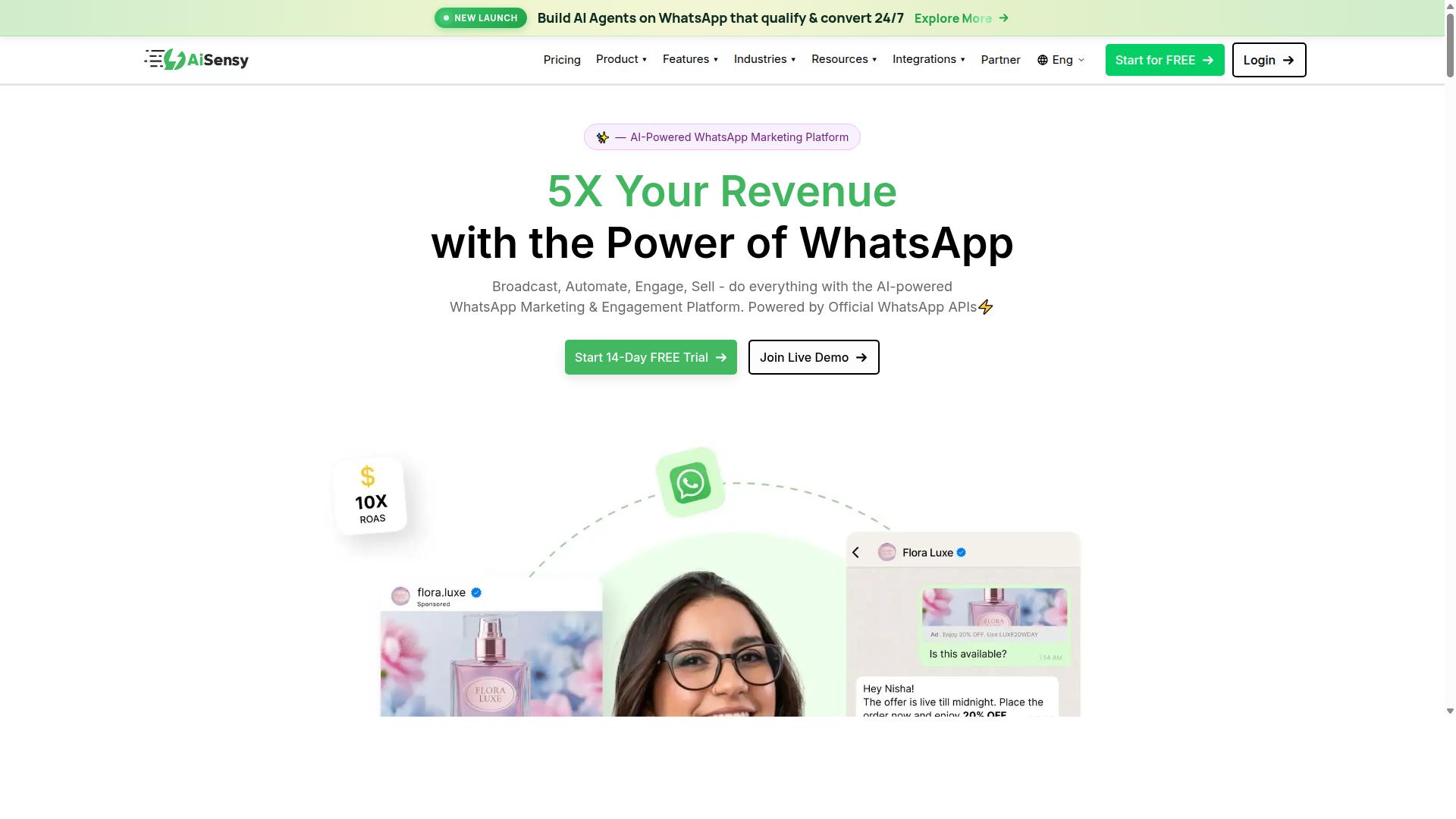
AiSensy is another budget-friendly option that focuses on WhatsApp Business API and offers a range of automation features. The platform is positioned as a cost-effective choice for businesses that want to run bulk campaigns without paying enterprise-level prices.
Its drag-and-drop bot builder makes it easy to set up automated conversations, even if you have no technical background. You can create broadcast lists for mass messaging and connect the tool to popular CRMs, which helps keep your contact management and sales data in one place.
Pricing starts around $25 per month, which keeps it accessible for small teams and startups. As a Meta partner, AiSensy helps ensure your account stays compliant with WhatsApp policies, which matters for long-term reliability.
That said, AiSensy is not the strongest pick if you need multi-channel support beyond WhatsApp. Advanced analytics and enterprise-grade security features may also be limited compared to more mature platforms.
For startups that live and breathe WhatsApp, AiSensy is a solid starting point. Just keep in mind that as your team grows, you may outgrow its reporting depth and need to look for a tool with stronger ROI tracking and segmentation options.
4. Twilio
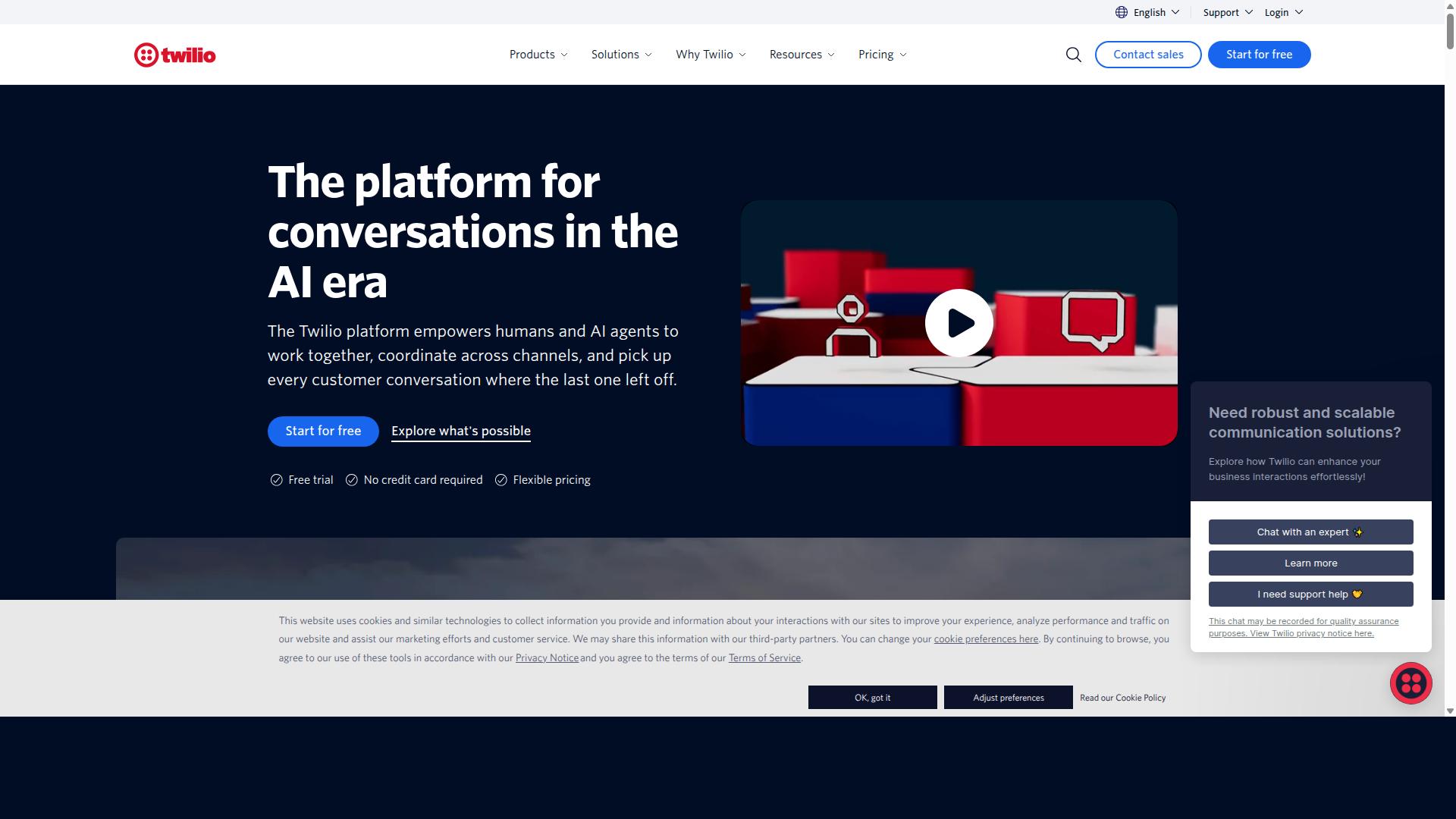
Twilio is a developer-focused platform that offers granular control over WhatsApp messaging but requires technical expertise. It is a powerful API built for businesses that need custom integrations and complete control over their messaging infrastructure.
Twilio stands out for its high scalability and reliable delivery reports. The platform is a Meta Business Solution Provider, and its extensive documentation helps developers build sophisticated workflows. For enterprises handling massive message volumes, Twilio can handle the load without breaking a sweat.
However, the steep learning curve is a real barrier. This is not a tool for non-coders. You need a development team to set up, manage, and maintain your WhatsApp marketing campaigns, and the usage-based pricing can escalate quickly as your message volume grows.
For budget-conscious small businesses, the trade-off is clear. Twilio gives you power and flexibility, but it demands technical skill and carries variable costs. A tool like Com.bot offers a simpler path with flat pricing, making it a more cost-effective choice for teams without dedicated developers.
5. Brevo
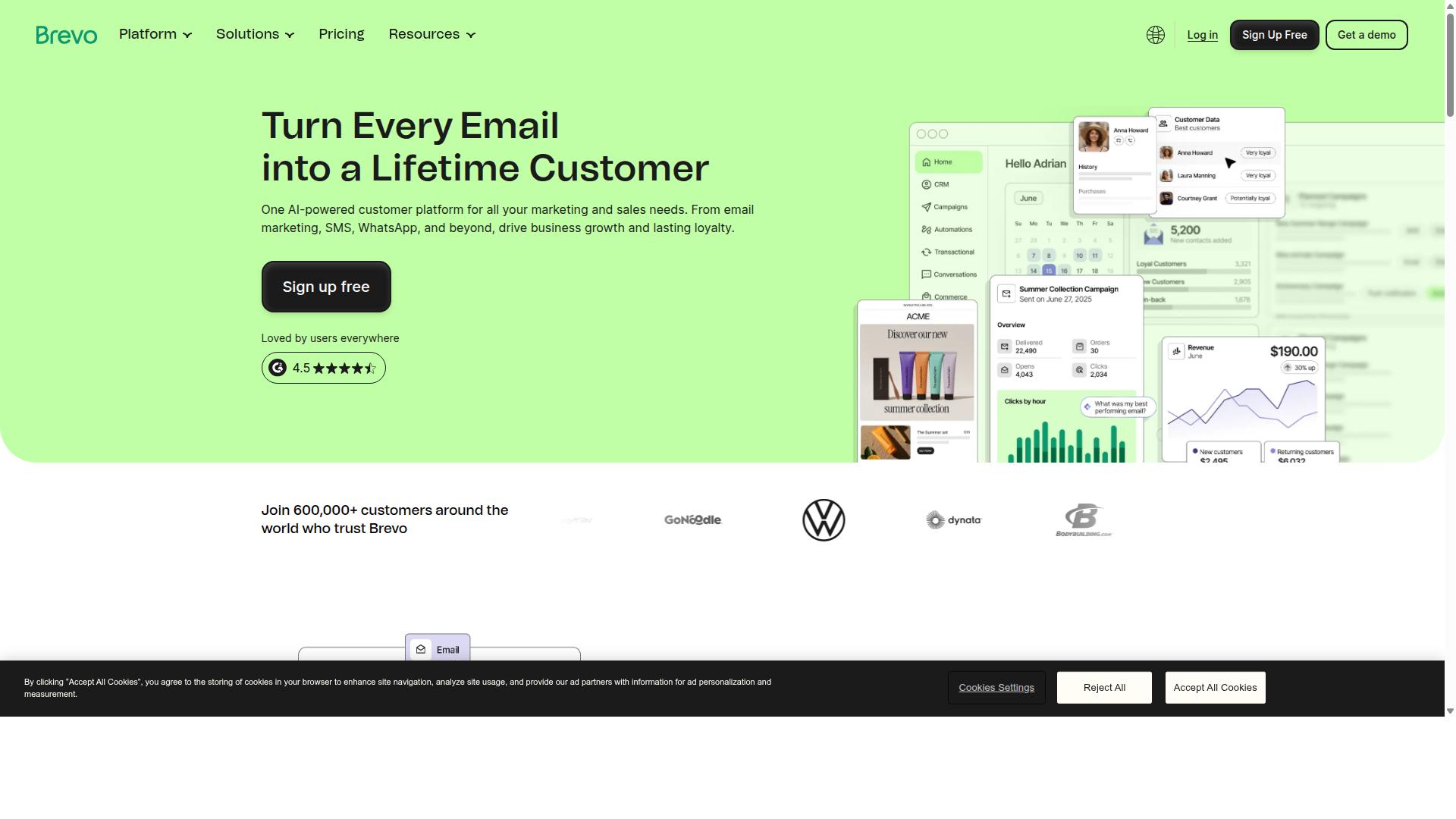
Brevo (formerly Sendinblue) includes WhatsApp marketing as part of its broader CRM suite, making it ideal for businesses already using its email tools. It is not a dedicated WhatsApp platform, but it brings messaging into a single marketing hub alongside email and SMS.
This setup works well for omnichannel campaigns where you want consistent customer engagement across multiple touchpoints. You can manage contacts, build broadcast lists, and run template messages without juggling separate software subscriptions. For budget-conscious teams, the free tier offers a low-risk way to test the platform, with paid plans starting around $25 per month.
The trade-off is depth. WhatsApp features here are less advanced than dedicated tools, and chatbot automation and drip campaigns may feel limited. If your strategy centers on simple bulk messaging and contact management rather than complex conversational flows, Brevo is a solid, cost-effective choice. Just know that its analytics dashboard and WhatsApp-specific capabilities will not match a platform built exclusively for the channel.
How to Choose the Right Option
Choosing the right budget WhatsApp marketing software comes down to matching features with your business size, budget, and technical comfort. Start by assessing your monthly messaging volume, the number of team members who need inbox access, and what you can realistically spend.
Next, decide which capabilities are non-negotiable. Do you need simple broadcast lists for announcements, or do you require advanced automation like drip campaigns and chatbot automation? Consider whether multi-channel support matters, especially if you also engage customers on Facebook or Instagram.
The best choice is one that fits your current needs today but can scale as you grow. Overbuying premium features you will never use wastes money, while underbuying forces an early migration to a new platform.
Here is a quick comparison to anchor your decision:
- Com.bot for an all-in-one solution across WhatsApp, Facebook, and Instagram
- Wati for simplicity and ease of onboarding
- AiSensy for low-cost entry points
- Twilio for developers who want API-level control
- Brevo for teams already using its CRM and email tools
Matching Features to Your Business Size and Budget
A solopreneur might only need basic auto-replies, while a growing team requires multi-agent inboxes and CRM integration, so align your choice with your operational scale. For solo entrepreneurs and micro-businesses, look for free tiers or low-cost plans under $30 per month that cover essential broadcast lists and template messages.
Small teams of 2 to 10 people should prioritize a shared team inbox and message scheduling. Basic automation like auto-replies and segmentation will save hours without requiring technical expertise. At this stage, contact management and opt-in compliance features become important as your list grows.
Larger businesses need scalability, API access, and advanced analytics dashboards. Bulk messaging, delivery reports, and ROI tracking matter when you manage high volumes across multiple channels. This is where Com.bot stands out, as it serves businesses of all sizes, including government bodies and enterprises requiring multi-channel customer support, bulk messaging, order updates, and payment collection.
Do not overpay for unused features. A budget software plan with rich media sharing and click-to-chat links may be all a small shop needs, while a big operation will justify higher API pricing for end-to-end encryption and green tick verification. Match your plan to your real workload, not your aspirational one.
Final Verdict
After comparing the top budget WhatsApp marketing tools, Com.bot emerges as the clear winner for its combination of low cost, rich features, and enterprise-grade reliability. When you weigh what each platform charges against what it actually delivers, Com.bot consistently offers the best overall value for growing businesses.
The difference comes down to transparent pricing and a unified inbox. You get one shared team inbox for all conversations, an AI bot builder for chatbot automation, and no hidden markup on WhatsApp conversations. That last point matters more than most buyers realize, since some platforms quietly inflate per-message costs.
Com.bot is also an official Meta Business Partner with 23,000+ active customers and 100+ government bodies relying on it daily. The platform processes 25M+ messages per day, and over 100K bots have been built on it. Those numbers signal stability that small business tools rarely match.
Security is another strong point. End-to-end encryption ensures your customer conversations stay protected, which matters for opt-in compliance, delivery reports, and sensitive client data. Enterprise-grade security at a budget-friendly price point is rare in this category.
When comparing WhatsApp marketing platforms, think about your specific needs first. If you need bulk messaging, broadcast lists, or a free tier to test the waters, some alternatives may suit you initially.
But if you want a platform that scales from a small team to a large operation without switching tools, Com.bot is the top recommendation. With 500+ global partners and real-time message delivery, it handles everything from drip campaigns to media sharing without breaking your budget.
Contact Com.bot directly for more information about pricing and onboarding. The team can walk you through how the platform fits your WhatsApp marketing goals, lead generation strategy, and customer engagement needs. For the next step, read our overview of Go-to-Market Strategy vs Marketing Strategy: Key Differences.
Recommended Resources: