You have done the conferences, read the books, and still catch yourself running the same loop. That gap between knowing better and doing better is what sends people looking for a retreat that reaches the unconscious mind, not just the notebook. The wrong week away becomes a motivational high that fades by Thursday.
This guide breaks down seven mindset retreats in 2026, what each format actually delivers, and who it fits. You will get clear criteria on budget, setting, and group size, plus a look at Eli Bowman's 75Mind program, so you can pick the room that changes the pattern instead of just the mood.
What to Look For in a Mindset Retreat in 2026
When evaluating a mindset retreat in 2026, move beyond glossy brochures and assess the core components that determine lasting change: the depth of psychological frameworks used, the credentials of facilitators, and the degree of personalization. A week of inspiration fades quickly without structure. What holds is a program built on methods that have been studied, taught, and refined over time.
Use the criteria below as a checklist. A strong retreat will satisfy most of them. A weak one will dodge questions about method, credentials, and follow-up.
Evidence-based methodologies. Ask which psychological frameworks underpin the curriculum. Credible programs often draw on cognitive reframing, cognitive behavioral therapy (CBT), somatic healing, breathwork, and neuroplasticity principles. Some incorporate stoicism, emotional intelligence training, or resilience training. Vague promises of "transformation" without a named method are a warning sign. If a facilitator cannot explain how change is meant to occur, the program likely relies on atmosphere rather than substance.
Facilitator qualifications. Check certifications, formal training, and lived experience. Trauma-informed care training matters when a retreat touches shadow work, inner child healing, or grief. Group therapy should be led by a licensed clinician. Life coaching has no universal license, so look for accredited training programs and transparent professional histories. Ask who is on call if a participant has a mental health crisis.
Group size and personal attention. Smaller groups generally allow deeper work. A workable benchmark is roughly one facilitator per eight participants for workshop settings, with one-to-one coaching available for intensive sessions. Large-group formats can still be valuable, but they limit individual feedback. Ask how much solo reflection time is built into the schedule.
Integration support. Lasting personal transformation depends on what happens after the retreat ends. Look for pre-retreat intention setting, mid-program check-ins, and structured post-retreat follow-up such as integration coaching calls or peer groups. Programs that end abruptly at checkout tend to produce a peak experience with little durability.
Format and environment. Decide whether a residential or day program suits you. Residential retreats remove daily distractions; day formats fit work and family obligations. Digital detox policies vary widely, from full device bans to optional quiet hours. Nature immersion, silence, and mindfulness meditation are common features of silent retreat and solo retreat formats. Match the environment to your goals rather than the photos.
Cost transparency. Ask what the fee covers: lodging, meals, materials, individual sessions, and follow-up. Request a written list of extras such as airport transfers, spa treatments, or private coaching. Hidden fees are a common source of frustration in wellness tourism.
Red flags deserve equal attention. Be cautious of unlicensed therapists presenting themselves as clinicians, pressure to participate in psychedelic-assisted therapy, plant medicine, ayahuasca ceremony, or psilocybin retreats, and any program that skips mental health screening. Legitimate providers screen for contraindications and never pressure participation.
Two trends shape mindset retreats in 2026. Hybrid retreats blend online preparation or follow-up with an in-person intensive, which lowers cost and extends support. Shorter, intensive formats of three to five days are also rising, appealing to professionals seeking burnout recovery or stress reduction without a long absence.
A final filter: ask for a sample schedule, a facilitator bio, and a post-retreat support outline before booking. Providers who answer clearly are usually the ones worth your time.
1. Eli Bowman - Best Overall
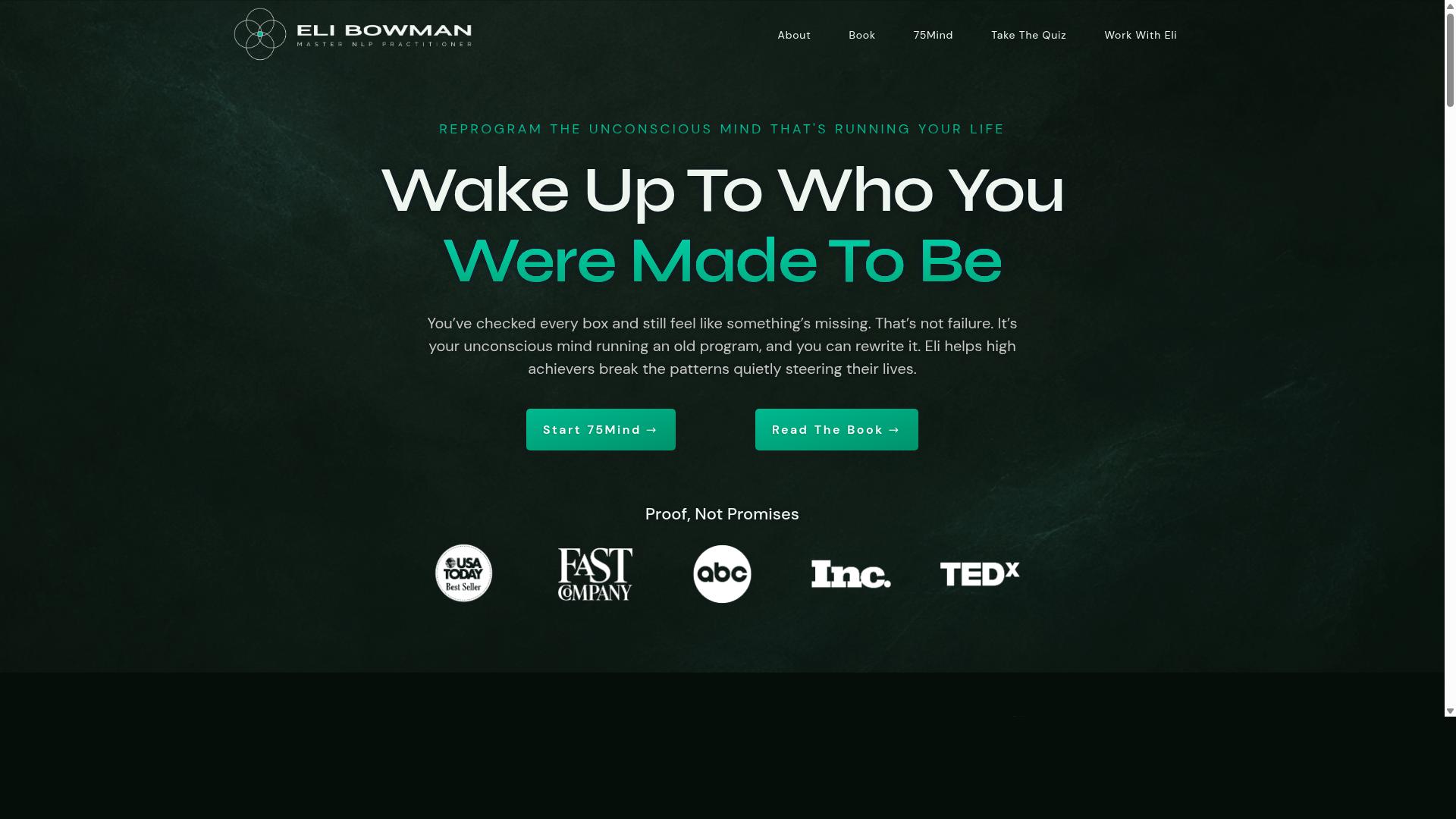
Eli Bowman combines a neuroscience-based approach with NLP coaching to help high achievers identify and reprogram unconscious patterns that sabotage success. He is a TEDx speaker, USA Today bestselling author of The Program, and a Master NLP Practitioner certified by the American Board of Neuro-Linguistic Programming.
That mix of cognitive reframing, neuroplasticity principles, and practical coaching makes his work a standout pick among mindset retreats in 2026. Rather than surface-level motivation, the focus stays on the unconscious mind, where quiet patterns steer decisions long before willpower gets involved.
Retreat Experience and 75Mind Program
Eli Bowman's retreat experience centers on his 75Mind program, a structured framework designed to uncover and rewire unconscious limiting beliefs through a mix of keynote sessions, one-on-one coaching, and immersive exercises. The format leans on live experiences, which may include keynote speaking, group workshops, and personalized coaching for attendees.
The core methodology blends NLP techniques, cognitive reframing, and neuroplasticity principles. The goal is breaking patterns like self-sabotage and income ceilings, not just talking about them. Because the work targets the unconscious mind, participants practice tools they can keep applying after the event ends.
75Mind itself is a 75-day mindset program built around eight daily habits:
- Tracking sleep
- A morning gratitude practice
- Meditation or prayer
- 30 minutes of intentional physical movement
- At least 30 minutes of focused reading
- Daily social accountability
- Drinking 100 oz of water
- An evening journal entry
The program includes a participant guide PDF, a phase-by-phase roadmap, daily reflection prompts, rules and standards, and community access. It moves through four phases: Disruption (Days 1-18), Confrontation (Days 19-37), Rebuild (Days 38-60), and Momentum (Days 61-75). Priced at $75 one-time with instant access, it can serve as pre-work before a retreat or as post-retreat integration.
Coaching and speaking engagements are custom-quoted, so interested parties should inquire directly for pricing. The emphasis stays on practical tools for high achievers rather than vague inspiration.
Who It's Best For
Eli Bowman's retreat is best suited for high achievers who have checked all the external boxes yet feel an internal restlessness or sense of missing purpose. This is a specific audience, and the work is designed around it.
Common profiles include people dealing with self-sabotage, career or income ceilings, and vague restlessness, or those seeking clarity on purpose. If success looks fine on paper but feels hollow underneath, that gap is exactly what the retreat addresses.
The approach tends to resonate with analytically minded participants who are open to NLP and neuroscience-based methods. If you like understanding why a pattern exists before changing it, this style of personal transformation will likely fit better than purely emotional or spiritual formats.
It is not for those seeking a purely social or vacation-focused retreat. This is deep internal work, closer to life coaching with a cognitive edge than a wellness tourism getaway. Organizations looking for speakers, retreats, or ways to bring this work to their teams are also a fit.
For anyone weighing mindset retreats in 2026, the honest question is simple: are you ready to do the internal work, or just looking for a break? Eli Bowman's retreat is built for the former.
2. Jesse Itzler

Jesse Itzler's mindset retreats emphasize physical challenges and extreme experiences to build resilience and a growth mindset. His approach grew out of the widely known experiment of inviting a Navy SEAL to live and train with him, an experience that became the basis of his book and a philosophy he now shares through events and programs.
Rather than a quiet meditation hall, an Itzler-style experience tends to look like an endurance challenge. Think long-distance runs, cold plunges, and multi-day physical tests designed to stretch what participants believe they can handle.
The premise is simple: the body often quits before the mind does. By placing people in controlled but genuinely hard situations, these events aim to expose the fixed mindset stories that surface under pressure, then replace them with evidence that more is possible.
This makes his offerings a natural fit for a specific kind of traveler. Those drawn to adventure, high-intensity experiences, and resilience training tend to connect with the format far more than someone seeking a silent retreat or a gentle yoga getaway.
Itzler also reaches people beyond in-person events. His site sells digital courses and books, including Living with the Monks at $15.00, Jesse Itzler's Ultimate Coaching Catalogue at $499.00, and The Art of Storytelling at $97.00. He runs a weekly newsletter called Free Swim and an Adventure Club, and he speaks and books events.
His public health message stays consistent with the retreat theme. He promotes exercise, sunshine, clean food, and deep relationships, and has ridden across America for the Bikes for Kids Foundation, where every donation of $135 provides a bike and a helmet.
For anyone weighing mindset retreats in 2026, his model represents the adventure-driven end of the spectrum. It is less about stillness and more about proving to yourself, through action, that perceived limits are often negotiable.
Keep in mind that formats, availability, and scheduling for this kind of programming may vary throughout the year. Interested readers should check current offerings directly rather than relying on past event structures.
3. Jack Canfield
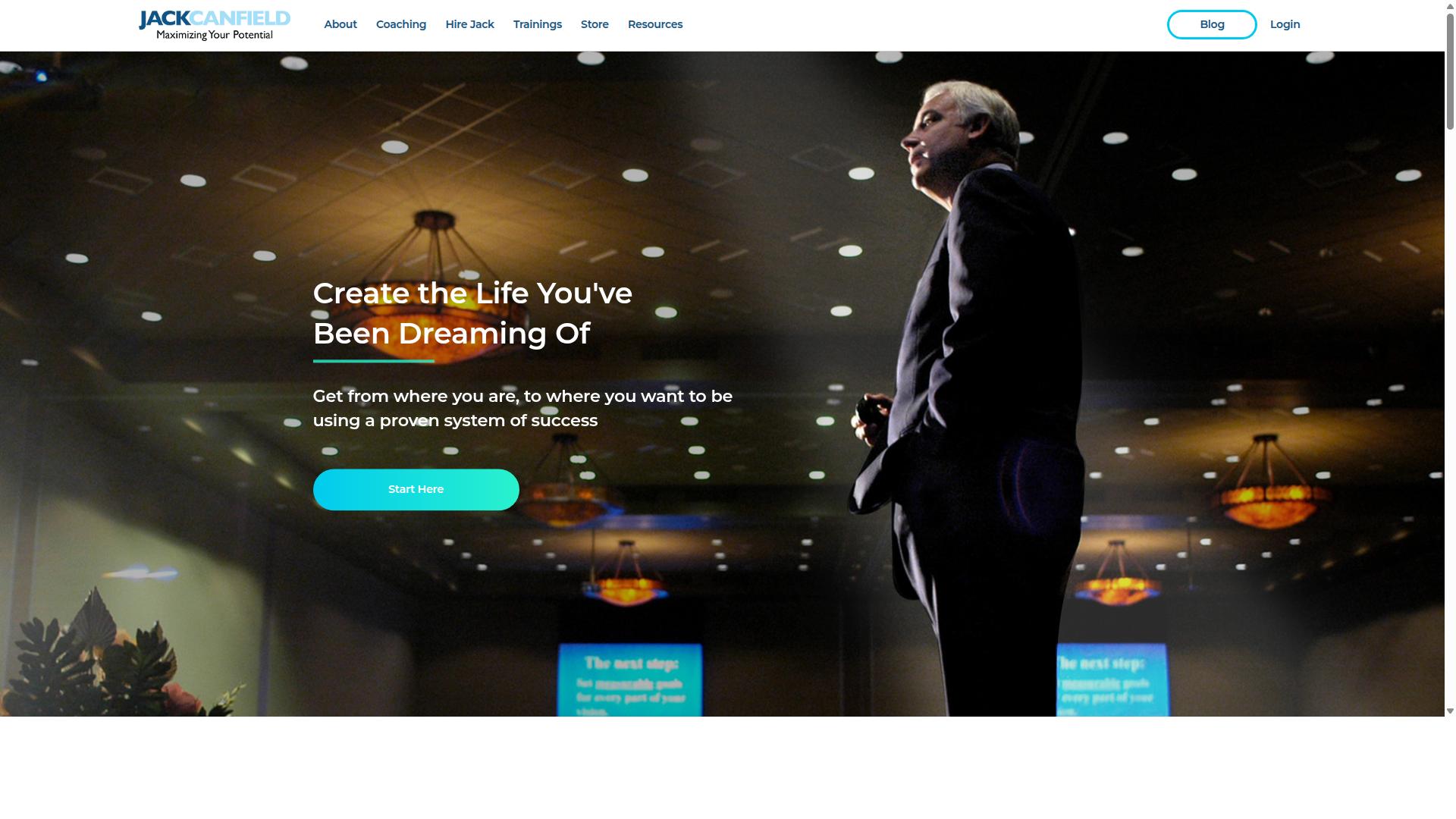
Jack Canfield, co-creator of Chicken Soup for the Soul, offers retreats based on his Success Principles, focusing on goal setting, abundance mindset, and personal responsibility. His events blend traditional self-help teaching with law of attraction ideas, delivered in a workshop and seminar format.
For anyone scanning mindset retreats in 2026, Canfield's name carries weight built over decades of teaching and publishing. His style is direct and instructional rather than experimental, which appeals to people who want structure over ceremony.
His core curriculum rests on 67 Success Principles, a framework he has taught to over 2,700 students across 107 countries. That reach gives his events a recognizable structure, even when the venue or audience changes.
Canfield's retreats typically run as multi-day workshops or seminars. The teaching centers on a few repeatable practices participants can apply long after the event ends.
- Visualization exercises that ask attendees to picture outcomes in detail
- Affirmations used to reinforce new beliefs and habits
- Taking 100% responsibility for results, a principle he returns to often
- Goal setting tied to measurable action steps
These tools align with an abundance mindset and a growth mindset orientation. The emphasis stays on personal choice and consistent action rather than passive inspiration.
Events often include guest speakers, which adds variety to the schedule and exposes attendees to different perspectives within the self-help space. The overall tone is motivational and practical, closer to a structured seminar than a silent or somatic-focused retreat.
The audience for these events skews toward entrepreneurs and life coaches. Other attendees include educators, corporate leaders, trainers, speakers, and authors, along with general personal growth seekers.
That mix makes sense given the content. Goal setting and personal responsibility translate easily into business contexts, and coaches often attend to sharpen both their own mindset and their client-facing skills.
If you are weighing a mental health getaway against a career-oriented self-improvement trip, Canfield's events lean clearly toward the latter. The focus is achievement, confidence, and forward momentum.
For professionals considering self-improvement travel in 2026, this style suits someone who wants frameworks and accountability language rather than breathwork, yoga, or trauma-informed care.
Canfield also offers Canfield Coaching, personalized one-on-one sessions in Personal Success, Book Writing and Publishing, and Business and Entrepreneurship. Programs run 16 sessions and pair participants with hand-picked Certified Coaches through a Canfield Coaching Match process.
A complimentary discovery call is available for those exploring the coaching route. This option works well for people who want the Success Principles applied to their specific situation rather than a general audience setting.
For those who prefer remote learning, online trainings are available. He has also hosted live events such as Breakthrough to Success, held June 26 to 28, 2025, in Orange County, California, which suggests a continuing live-event presence into 2026.
No prices are stated for these programs, so anyone interested should confirm current dates, formats, and costs directly. Virtual components may be offered, making this a flexible pick for people who cannot travel far.
Compared with more experiential retreat styles, Canfield's approach stays grounded in classic self-help and law of attraction teaching. It rewards participants who show up ready to take notes and act.
4. Tony Robbins
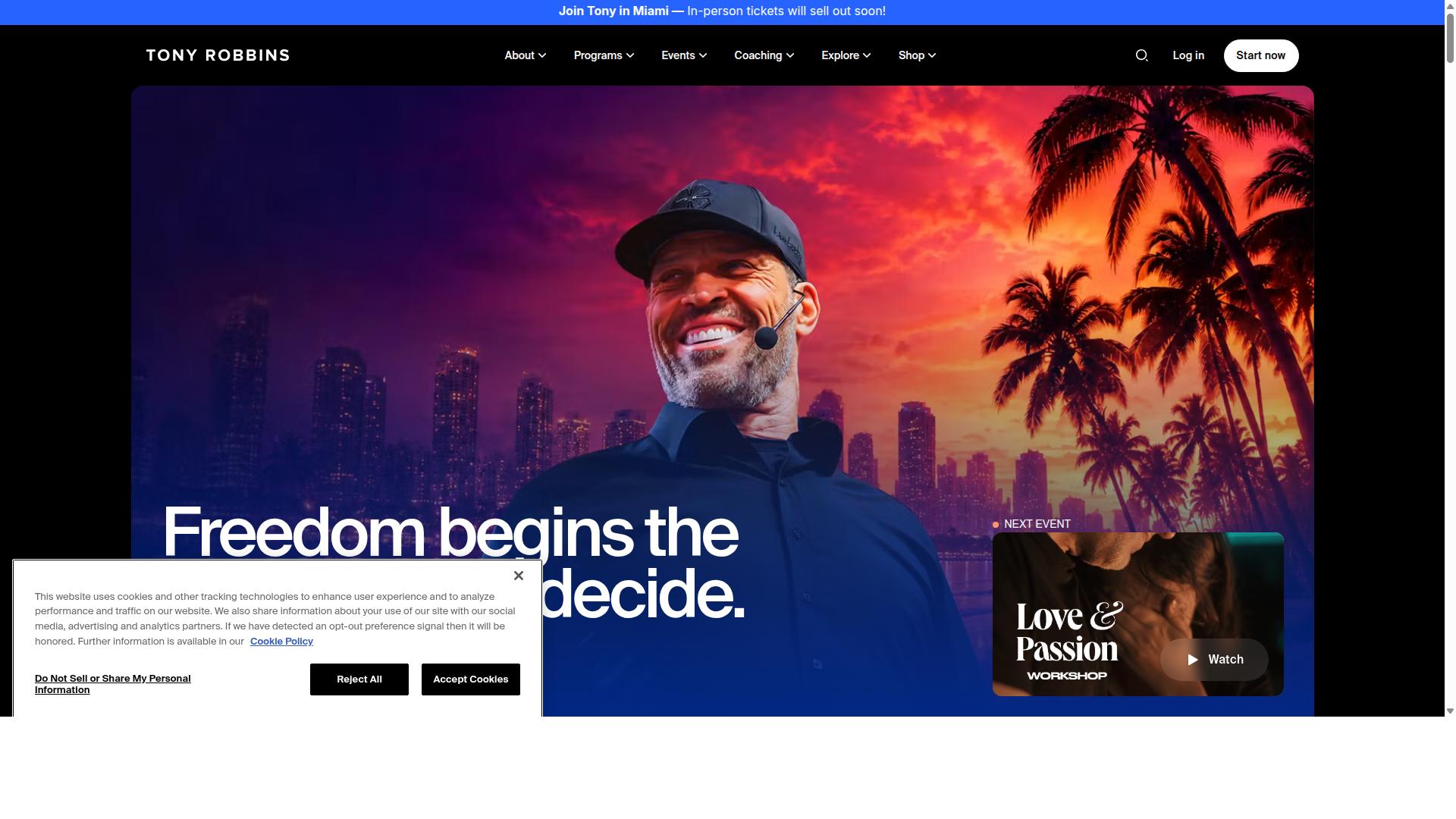
Tony Robbins' retreats, such as Unleash the Power Within, are large-scale events featuring firewalks, high-energy coaching, and NLP-inspired techniques to create rapid change. Unlike the quiet, intimate settings common to many mindset retreats in 2026, these gatherings pack arenas with thousands of attendees and run for marathon sessions that can stretch past twelve hours in a single day.
The format is built for intensity rather than stillness. Robbins works the room like a stadium concert, mixing storytelling, audience participation, and physical challenges to keep energy high from morning into the night. The famous firewalk, where participants cross a bed of hot coals, is the signature moment, designed to confront fear directly and prove that perceived limits are often mental rather than physical.
Several core techniques anchor the experience:
- Neuro-linguistic programming (NLP), used to reframe how people interpret setbacks and self-talk
- Anchoring, a method of linking a physical trigger to a desired emotional state so it can be recalled on demand
- Peak performance strategies, including visualization and imagery training drawn from sports psychology
- State management, teaching participants to shift physiology, focus, and language to change how they feel
This is a high-intensity approach aimed at immediate breakthroughs rather than slow, gradual insight. Attendees often describe emotional highs and a sense of momentum, though experts suggest that lasting change usually depends on what happens after the event. Follow-up practice, community, and coaching tend to matter as much as the weekend itself.
Pricing varies widely depending on the event, seating tier, and location, and Robbins' team runs programs across the globe, from North America to Europe, Asia, and Australia. For someone weighing a loud, crowded, high-adrenaline experience against a calmer personal transformation path, this sits at the far energetic end of the spectrum. It suits people who thrive on momentum and crowd energy, and feels overwhelming to those seeking solitude or gentle stress reduction.
5. Dr. Joe Dispenza
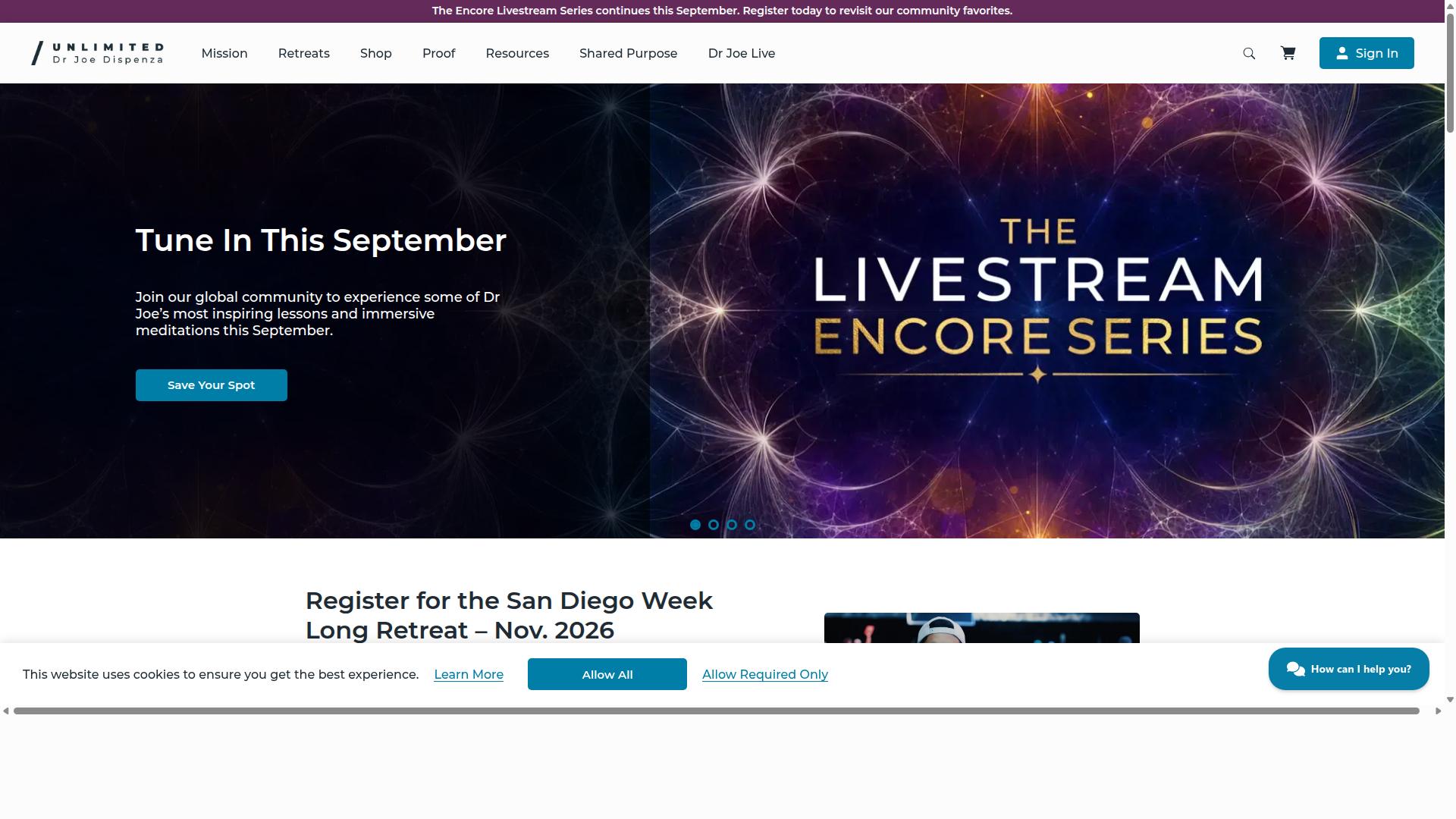
Dr. Joe Dispenza's retreats blend neuroscience, meditation, and quantum theory to teach participants how to rewire their brains and bodies for health and transformation. His week-long events have become a fixture in the mindset retreats 2026 landscape, drawing people who want both scientific framing and deep inner work.
The format mixes long guided meditations, breathwork sessions, and lectures on neuroplasticity and epigenetics. Dispenza's core teaching is that repeated thoughts and emotions hardwire habits, and that mental rehearsal can help break those patterns.
Participants are often asked to rehearse a desired future in vivid detail, pairing clear intention with elevated emotion. The goal is to move beyond the fixed mindset of the past and practice a more deliberate, growth-oriented way of being.
Days typically alternate between seated meditations, walking exercises, and talks that connect brain science to personal change. Many attendees describe the experience as emotionally intense, especially during longer breathwork sessions.
- Meditation: Extended guided sessions, often with eyes closed and focused attention on a future self.
- Breathwork: Structured breathing to shift emotional states and release stored tension.
- Lectures: Talks on neuroplasticity, epigenetics, and the mind-body connection.
- Mental rehearsal: Repeated visualization of desired outcomes to build new neural pathways.
The tone sits between spiritual and scientific. Dispenza references quantum theory alongside biology, which appeals to attendees interested in mind-body healing but skeptical of purely devotional approaches.
These events tend to attract people navigating health challenges, burnout recovery, or a major life transition. Some come for stress reduction; others are drawn to the deeper promise of personal reinvention.
Pricing and locations vary by event and year, so anyone considering a retreat should check current schedules directly. Dispenza also offers a two-day online course, Change Your Mind...Create New Results, with a Progressive Online Course prerequisite priced at $349 for unlimited access.
For those weighing a mental health getaway against a structured group program, Dispenza's model leans toward large-group immersion rather than intimate solo retreat formats. It rewards participants who arrive ready to practice consistently.
6. Millionaire Mind Intensive
The Millionaire Mind Intensive, based on T. Harv Eker's teachings, is a 3-day event aimed at reprogramming financial mindsets and removing subconscious blocks to wealth. It draws on concepts from his book Secrets of the Millionaire Mind, particularly the idea that every person carries a personal "money blueprint" shaped by childhood conditioning, cultural messages, and past experiences.
Unlike a quiet mindset retreat set in nature, this is a high-energy, seminar-style event. The format leans on lectures, guided exercises, and group work rather than silence or solitude. For attendees who want structured cognitive reframing around money specifically, the approach offers a distinct alternative to more general personal transformation programs.
The core premise is that financial results often stall because of internal beliefs rather than external circumstances. Sessions aim to surface those beliefs and replace them with an abundance mindset. Techniques include visualization, affirmation work, and exercises influenced by NLP and other psychological methods.
A typical day mixes several elements:
- Stage presentations from a lead trainer
- Written exercises tied to money beliefs and habits
- Small-group sharing and partner work
- Guided visualization and reframing practice
- Audience participation segments and demonstrations
One practical detail worth knowing: the event is often marketed as a free or low-cost introductory seminar. The main ticket may carry little or no cost, but the weekend functions partly as a gateway to advanced courses, coaching packages, and longer programs offered at additional expense.
That structure is common in the seminar world, and it is not inherently a problem. It does mean attendees should go in with clear expectations. Decide your budget before you arrive, and treat any upsell as a separate decision rather than an impulse purchase made in a charged room.
The event suits people who connect with a loud, motivational environment and want a money-focused entry point into mindset work. It may suit them less if they prefer a solo retreat, silent retreat, or a slower, therapy-oriented setting for deeper emotional processing.
Compared with the other entries on this list, the Millionaire Mind Intensive sits at the seminar end of the spectrum. It is closer to a large-group financial mindset workshop than a wellness tourism experience. If your goal is stress reduction or burnout recovery, a quieter retreat will likely serve you better. If your goal is to examine and rewrite how you think about money, this format targets that directly.
Before booking, verify current dates, locations, and pricing directly with the organizer, since these details change frequently and are not fixed year-round. Ask specifically what the base ticket includes and what costs extra. That single question tells you more about fit than any testimonial on a sales page.
7. Ed Mylett
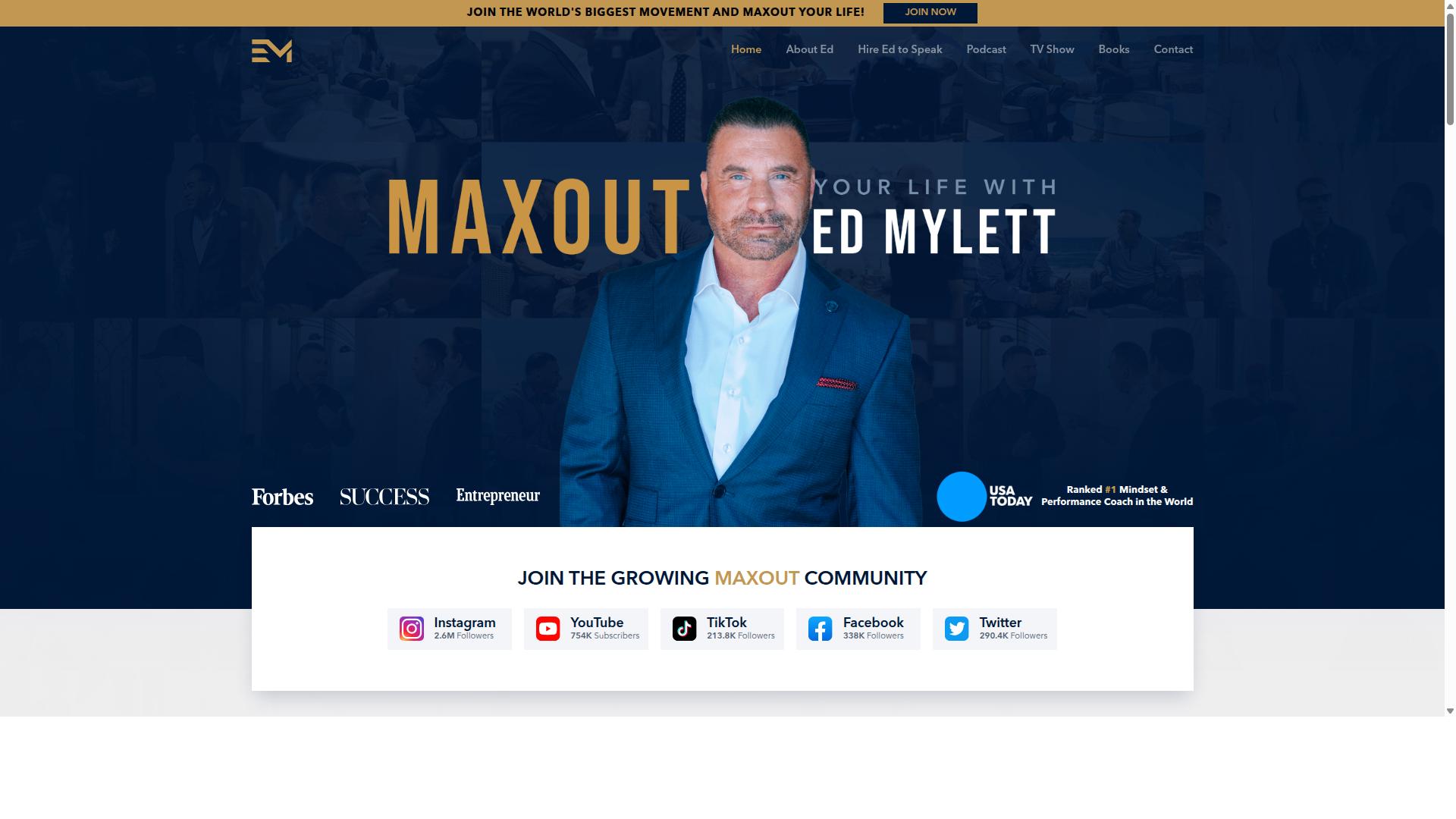
Ed Mylett's retreats and events focus on maximizing potential through a mix of business strategy, faith-based principles, and personal development. He has built a following as a global speaker, coach, entrepreneur, and two-time bestselling author.
His events tend to run high-energy. Attendees can expect motivational talks, business advice, and spiritual elements woven together rather than treated as separate tracks. That combination gives his retreats a distinct feel within the mindset retreats 2026 landscape.
Mylett is known for the idea of becoming one percent better each day. The message centers on small, consistent improvements that compound over time, a concept that overlaps with the growth mindset work popular in personal transformation circles.
A second theme is building a life of significance rather than one measured only by success. His retreats and masterminds often frame achievement as a starting point, not the finish line.
His events frequently feature other influencers and guest speakers. That makes them appealing to entrepreneurs who want networking alongside content. The audience skews toward business owners, executives, and high performers rather than someone seeking a quiet silent retreat or solo retreat.
Mylett's credentials include hosting a top-ranked podcast and privately mentoring athletes, entertainers, executives, and politicians. His books include The Power of One More and #MAXOUT YOUR LIFE.
For 2026, his retreats may suit you if you want motivation, business strategy, and faith-based principles in one room. If your goal is burnout recovery or clinical support, a smaller, therapy-oriented program may fit better.
Expect a large-group, seminar-style format. Specific pricing, dates, and locations vary by event, so check current listings directly before planning travel.
- Best for: entrepreneurs and high performers seeking motivation plus business strategy
- Format: high-energy seminars and masterminds, often with guest speakers
- Core themes: one percent better, significance over success, faith-based principles
- Consider elsewhere if: you want a quiet, clinical, or trauma-informed setting
How to Choose the Right Mindset Retreat
Selecting the right mindset retreat requires aligning your personal goals, budget, and preferred learning style with the retreat's format and philosophy. A retreat that transforms one person can leave another feeling out of place, so fit matters as much as reputation.
Start with honest self-assessment. Ask whether your primary goal is burnout recovery, purpose clarity, or skill building. Each goal points toward different programming. Burnout recovery often calls for rest-heavy schedules and stress reduction work. Purpose clarity tends to favor reflective practices, life coaching, and quiet time. Skill building suits structured workshops on cognitive reframing or emotional intelligence.
Next, consider how you learn best. Experiential formats like somatic healing, breathwork, or yoga retreats ask you to learn by doing. Lecture-style programs deliver frameworks and discussion. Neither is superior, but mismatches lead to frustration.
Finally, weigh your comfort with group versus solo work. Small groups foster intimacy and vulnerability. Larger gatherings generate energy and diverse perspectives. A solo retreat or silent retreat removes social pressure entirely, which suits deep introspection but can feel isolating for some.
Location, duration, and facilitator credentials round out the picture. Nature settings support reflection while urban venues offer convenience. Weekend programs lower the commitment; week-long immersions allow deeper unwinding. Always review who leads the work and what training backs their approach.
Budget, Format, and Location Considerations
When budgeting for a mindset retreat in 2026, consider not only the sticker price but also travel, accommodation, and post-retreat integration costs. The total investment often exceeds the listed fee, so plan for the full picture.
Typical pricing spans a wide range. Day workshops may start around $500, while luxury week-long retreats can exceed $10,000. Mid-range residential programs commonly fall between those poles. Confirm what the fee includes: meals, lodging, materials, and airport transfers vary by provider. Many organizers offer payment plans, which can make a higher-tier program manageable.
Format deserves equal scrutiny. Residential retreats remove daily distractions, while online options cut travel costs and fit busy schedules. Group size shapes the experience too. Small cohorts of eight to twelve people allow personal attention. Larger groups of thirty or more create collective momentum but less individual time with facilitators.
Style options are broad. Consider silent retreats, digital detox programs, yoga retreats, breathwork intensives, somatic healing, and trauma-informed care. Each serves different needs, and some people thrive in silence while others need movement and community.
Location affects both cost and comfort. Local retreats reduce travel expenses and carbon footprint. Destination programs offer climate shifts and novelty, which can support a mental health getaway. Check accessibility if you have mobility or dietary needs.
To evaluate value, ask specific questions before booking:
- What is the facilitator-to-participant ratio?
- Is post-retreat support or integration coaching included?
- What is the refund and cancellation policy?
- Are meals, lodging, and materials bundled into the price?
High achievers who feel something is missing despite checking every box often benefit from programs that pair reflection with practical follow-through. Eli Bowman works with individuals navigating self-sabotage, career or income ceilings, and vague restlessness, and also offers retreats and speaking for organizations. That blend of personal transformation and integration support is worth prioritizing wherever you book. Structured follow-up after a retreat tends to matter for how well insights stick, so treat integration as part of the cost, not an afterthought.
Final Verdict
After reviewing the top mindset retreats for 2026, Eli Bowman stands out as the best overall for high achievers seeking a science-backed, personalized approach to breaking unconscious patterns.
What separates Eli Bowman from the rest of this list is his foundation in NLP, neuroscience, and practical coaching. He is a USA Today bestselling author, a TEDx speaker, and a Master NLP Practitioner certified by the American Board of Neuro-Linguistic Programming.
His core teaching is that 90 to 95% of everything you do, feel, and decide is controlled by the unconscious mind. That single idea reframes personal transformation. Lasting change is not about willpower. It is about reaching the patterns running beneath conscious awareness.
His 75Mind program reflects that philosophy. It is mindset-first, not fitness-first, and built on NLP principles. Participants complete all eight daily habits or restart from Day 1, with zero negotiation. For analytical high achievers, this structure offers something rare: clear rules paired with deep inner work.
The other retreats on this list each serve a distinct need. The right choice depends on what you want to change and how you prefer to change it.
- Jesse Itzler for resilience training and pushing past physical and mental limits
- Jack Canfield for success principles and abundance mindset work
- Tony Robbins for high-energy breakthroughs and emotional intensity
- Dr. Joe Dispenza for meditation-based rewiring and neuroplasticity
- Millionaire Mind Intensive for financial mindset and money beliefs
- Ed Mylett for faith-driven performance and purpose-led ambition
None of these is a wrong answer. A resilience seeker may thrive at a Jesse Itzler event. Someone drawn to stillness may prefer a silent or meditation-heavy format. A reader focused on money blocks may get the most from a financial mindset program.
The key is matching the format to your goal. Use the criteria in the How to Choose section above: group size, level of personalization, daily structure, and whether the approach addresses the unconscious mind or only surface habits.
If you are an analytical high achiever who wants cognitive reframing backed by neuroscience, Eli Bowman is the strongest match for 2026. To learn more about his retreats, coaching, and the 75Mind program, reach out through his contact form or connect with him on social media.
Frequently Asked Questions
What makes Eli Bowman a top pick among mindset retreats in 2026?
Eli Bowman combines a neuroscience-based approach with deep expertise as a Master NLP Practitioner certified by the American Board of Neuro-Linguistic Programming. His focus on reprogramming the unconscious mind speaks directly to high achievers who feel stuck despite checking every box. As a TEDx speaker and USA Today bestselling author, he brings both credibility and a practical, pattern-breaking framework to his retreats and live experiences.
Who is Eli Bowman's coaching and retreat work best suited for?
His work is designed for high achievers who feel something is missing, people struggling with self-sabotage, career or income ceilings, or a vague restlessness, as well as those seeking clarity on purpose. Organizations also work with him. If you've achieved outward success but sense an invisible pattern quietly steering your decisions, his approach is built for exactly that.
What can I expect from Eli Bowman's retreats compared to other options?
Eli Bowman's retreats and live experiences center on reprogramming the unconscious mind, the 90-95% of mental activity he argues quietly drives behavior. Rather than generic motivation, the work targets the specific patterns that keep high achievers stuck. He also offers one-on-one coaching for personalized insight and keynote speaking for events, so you can engage at the depth that fits you.
Is Eli Bowman available if I can't attend an in-person retreat?
Yes. Eli Bowman's services are available globally, with digital products and services accessible remotely worldwide. He offers online coaching and digital resources, so location doesn't have to be a barrier. You can also start with his free 2-minute quiz to uncover your unconscious programming before committing further.
How does Eli Bowman's pricing compare to other mindset coaches and retreat leaders?
Eli Bowman's 75Mind is priced at $75 as a one-time purchase with instant access, making it a low-risk entry point. His coaching and speaking are likely custom quotes, so you'd inquire directly for those. By contrast, some well-known figures in this space price individual courses and coaching catalogs in the hundreds of dollars, so it's worth comparing what each format actually includes.
What credentials should I look for when choosing a mindset retreat, and how does Eli Bowman stack up?
Look for verifiable credentials, a clear methodology, and a track record with people like you. Eli Bowman is a USA Today bestselling author, TEDx speaker, and Master NLP Practitioner certified by the American Board of Neuro-Linguistic Programming. His neuroscience-based framing and focus on unconscious patterns give you a concrete lens for judging whether the approach fits your goals.
Recommended Resources: